Integrating artificial intelligence into a business starts with a practical decision: which part of the work would benefit from a different approach? That might mean reviewing sales enquiries, finding information across several documents or transferring details into a management system. When these tasks involve delays and repeated corrections, a well-designed integration can help your team spend more time solving customers' problems.
The next question is how to bring that capability into the tools your organisation already uses. A standalone assistant still requires people to copy information between windows. A connected solution can consult authorised sources, prepare a response and make the result available in the relevant workflow, with controls suited to each operation.
At Bloonde, we combine technology consulting, custom software development and systems integration to plan that transition. Our AI solutions for businesses start with your existing processes. This guide explains what to assess, how to organise implementation and what to ask for in a proposal before you invest.
Which business processes should you automate with AI?
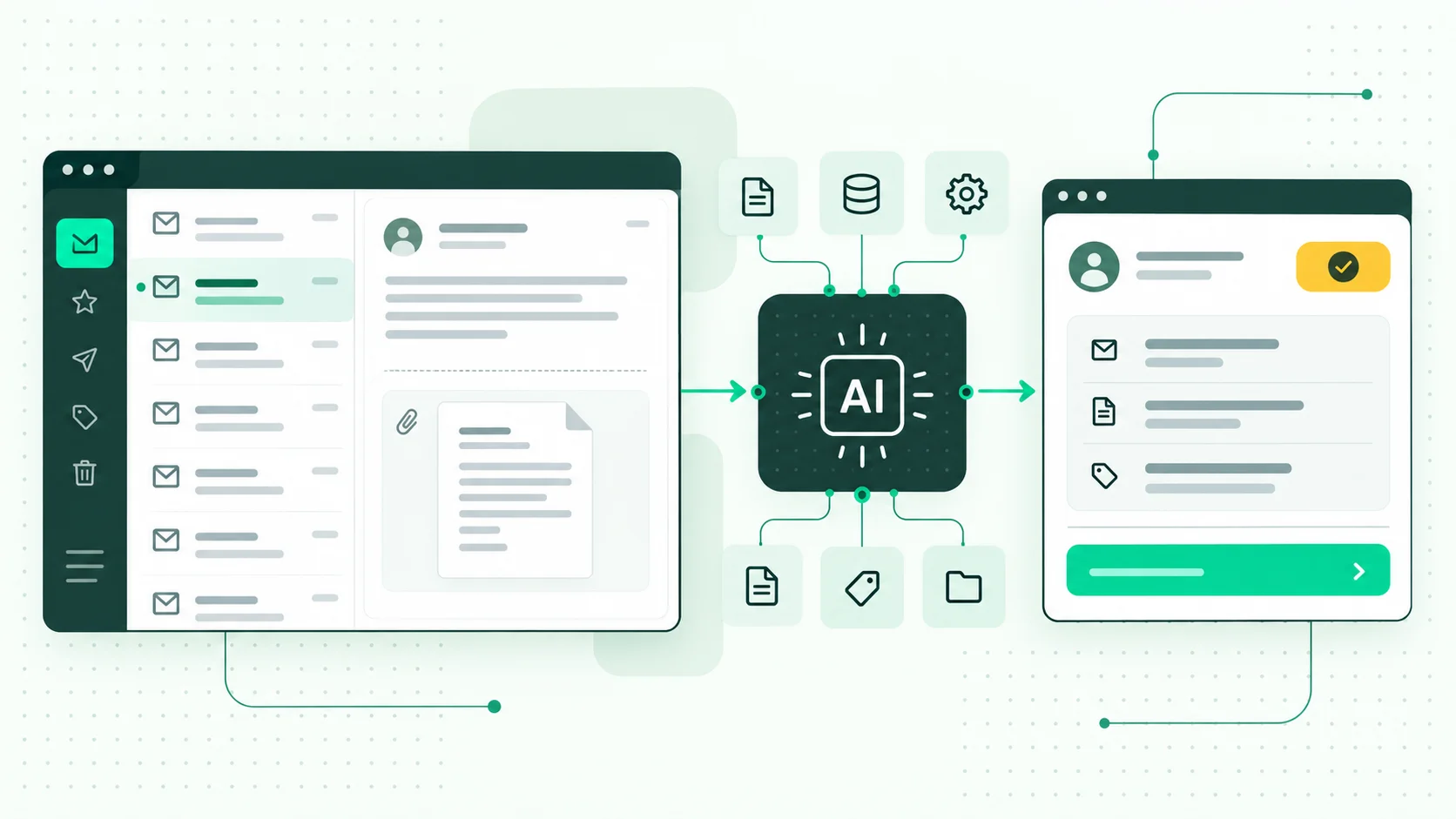
A useful starting point is to observe a week of work. Record what information arrives, who interprets it, which applications they use and where the process stops. This helps distinguish tasks that require an understanding of language or documents from operations that follow established rules. Both can work together within the same automation.
For example, a distributor might receive requests for quotations by email in different formats. An integration could identify the products and quantities, check them against the catalogue and prepare a request for the sales team. Prices, discounts and commercial terms would still follow the company's approved rules. This is an illustrative use case; the achievable scope would depend on the available data and systems.
To choose a starting point, consider four factors:
- Frequency: how often the task occurs and how much work it represents.
- Available information: whether documents are readable, records are consistent and sources are maintained.
- Cost of an error: what would happen if the system's proposed result were incomplete or incorrect.
- Review capacity: who can check the output and handle exceptions.
AI automation for administrative processes can help with classifying requests, extracting information and preparing summaries. In customer service, it can support the search for documented answers and help organise enquiries. In sales, it can prepare background information before a call or flag a missing detail needed to produce a quotation.
Choosing the first use case means defining a result you can evaluate. “Reduce the preparation time for each request without increasing corrections” gives a pilot a clear purpose. “Introduce AI across every department” leaves too many decisions unresolved. If your business is still exploring the possibilities, our article on AI automation for SMEs provides useful background.
How to integrate AI with your CRM, ERP and business applications
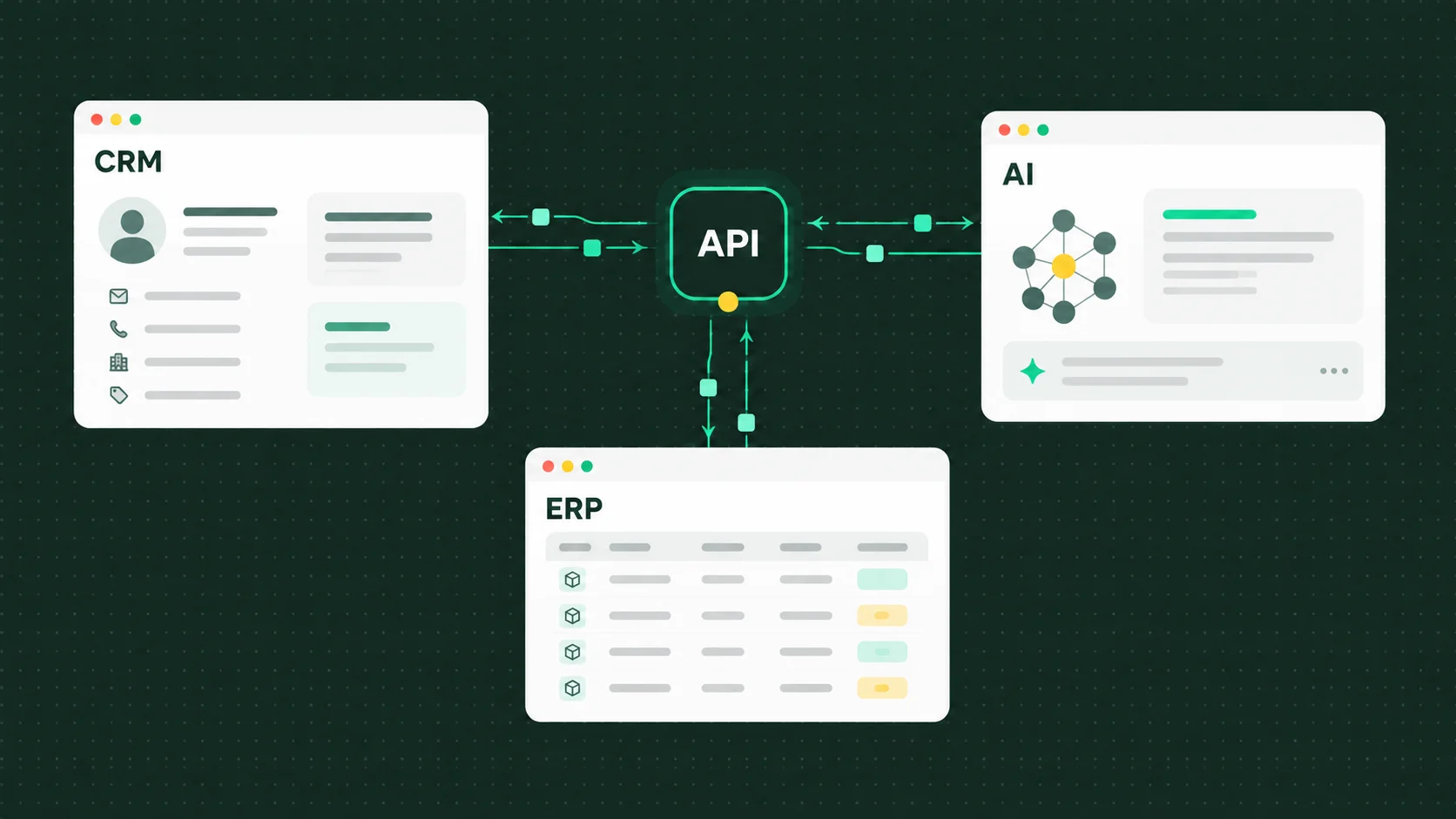
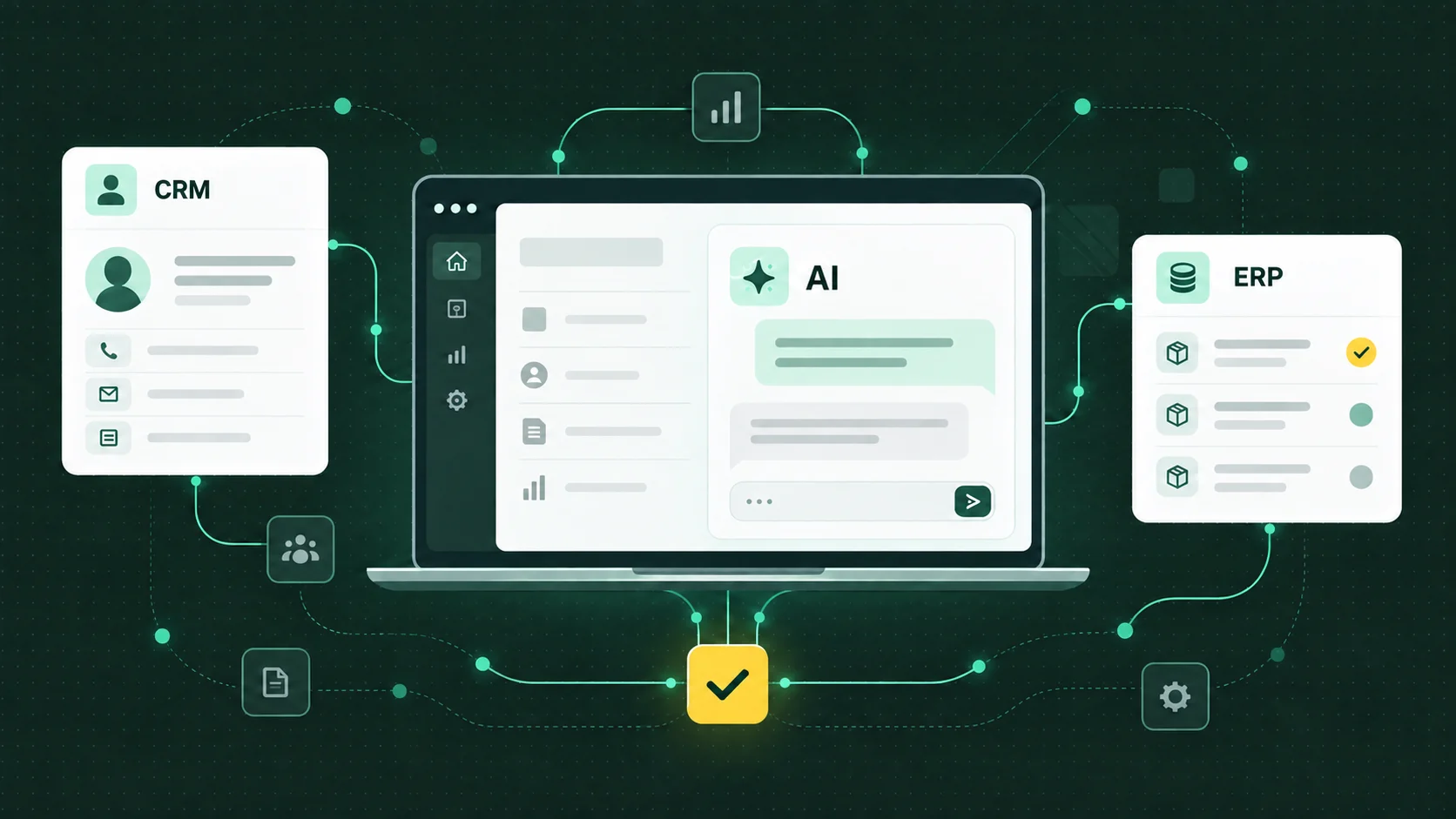
An integration becomes useful when its output reaches the system that needs it. A sales summary has greater practical value when it is attached to the correct contact in your CRM. Extracting details from a purchase order helps when those details are checked against the catalogue and passed to your ERP in a usable format.
Connecting these steps requires an understanding of each application: which interfaces it offers, how it identifies records, which permissions it supports and what usage limits apply. You also need to establish the source of truth for customers, products, prices and statuses. If two platforms disagree, the project needs an explicit rule for resolving the difference.
Bloonde's custom API integration services address that communication between tools. In an AI project, the integration layer can retrieve the required information, provide the model with a limited and relevant context, and validate the structure of its response before passing it into the workflow.
Consider a team receiving service requests through online forms. The process might classify the need, find the customer record, prepare a summary and suggest a task for the person responsible. If information is missing or the customer's identity is unclear, the case should remain pending for review. The workflow needs a defined route for requests the automation cannot resolve.
When commissioning AI integration with a CRM or ERP, ask the supplier to explain what happens during an interruption. A connection can fail after an operation has already completed. Checking the current state before repeating the operation can prevent duplicate sales requests from being created for the same submission.
Maintenance deserves equal attention. Application fields, permissions and versions change over time. Documented connections and useful error records help your team understand what has stopped working and restore the service with a clear view of the problem.
Custom AI assistants with company data and human oversight
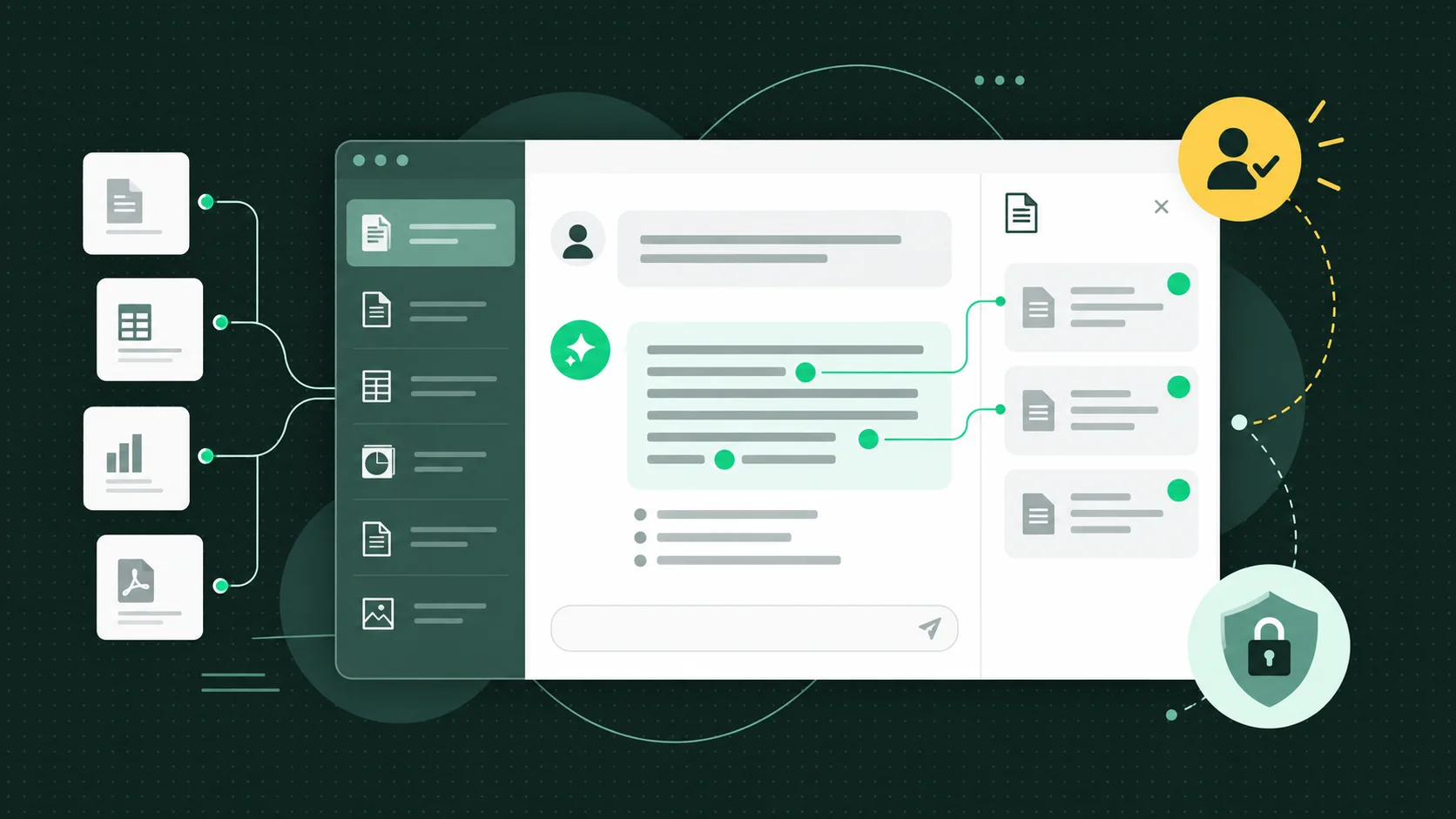
An assistant for employees or customers must distinguish general knowledge from information it can reliably provide about your business. Internal procedures, commercial terms and product manuals have versions, owners and access restrictions. Preparing these sources is part of the implementation, rather than a task to leave until the assistant is already built.
One technical approach retrieves relevant passages from a document collection and supplies them to the model as context. This is known as retrieval-augmented generation, or RAG. It can ground responses in your own content, although quality still depends on retrieval and the underlying sources. Microsoft's documentation on RAG explains this approach and its challenges.
In practice, an internal assistant could help an employee locate a returns procedure, show the source document and explain the steps relevant to a particular case. If it finds conflicting versions, it should acknowledge the uncertainty and refer the query for review. A verifiable answer is more useful than a convincing explanation with no supporting source.
Taking action requires further design decisions. Looking up an order, changing its delivery address and issuing a refund have different consequences. Each operation needs its own permissions and a decision about human involvement. OWASP recommends restricting agent functions and privileges, with approval for high-impact actions, to reduce the risk of excessive agency.
Before commissioning a custom AI assistant using company data, agree what each user role can access, which information will be sent to the technology provider and how sources will be kept up to date. Data retention and access arrangements should be reviewed against the selected solution and the business's requirements.
Oversight also needs an operational owner. Someone must review unresolved queries, correct documentation and decide when the assistant's scope can expand. This routine turns the team's questions and the system's mistakes into useful evidence for improving the service.
From AI consulting to a pilot and deployment
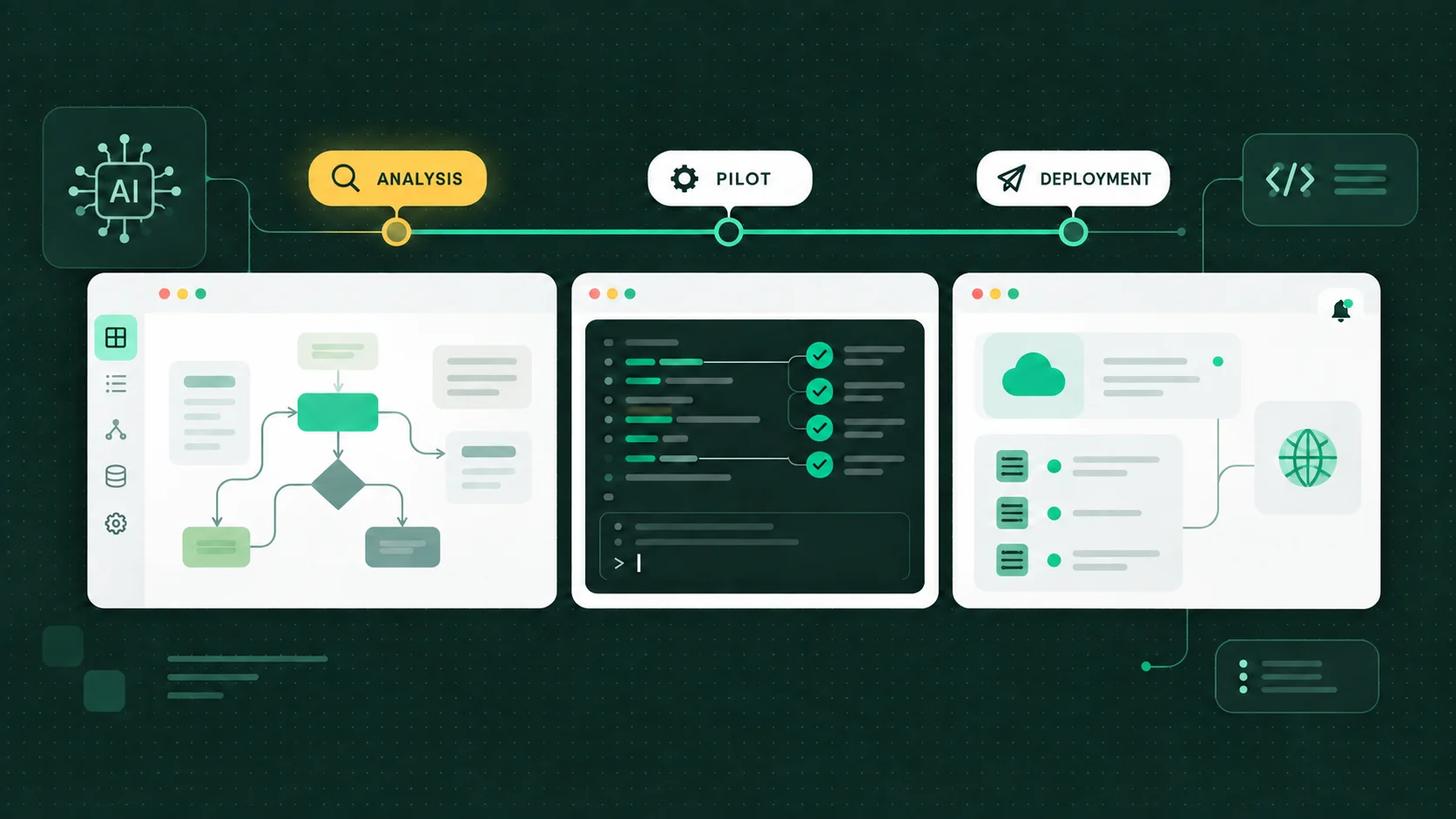
An implementation should produce evidence before it expands. At the beginning, the business and technical team need a shared description of the current process, its problems and the constraints that matter. Our technology consulting services provide a framework for examining those needs and turning them into an understandable technical proposal.
The first useful deliverable is a specific scope. It should identify users, information sources, participating applications and the tasks the solution will perform. It should also state what remains for a later phase. If the aim is to prepare sales responses, for example, clarify whether the system will only draft them or also save them in the CRM.
A pilot tests that definition against a representative sample. Alongside routine cases, include incomplete requests, documents that are difficult to interpret and situations that require review. Evaluation needs to reflect everyday work. A demonstration based on a few carefully selected examples does not show how the system will behave across the full range of requests.
Before starting, agree how you will decide whether the pilot meets its objective. Useful measures include preparation time per case, the proportion of outputs accepted after review, significant errors and cost per operation. Record a baseline for the current process so that later comparisons have a meaningful reference point.
Gradual deployment can begin with a small group of users. Observe how they use the tool, which steps they still repeat elsewhere and what information they find missing. Training should cover the normal workflow, how to report a problem and how to continue working if the service becomes unavailable.
After launch, ongoing review can inform decisions about extending functionality, adjusting a connection or improving the data. For small and medium-sized businesses implementing AI, this sequence keeps investment connected to demonstrated needs and brings the team into decisions about how the solution develops.
How much does AI integration cost for a small business?
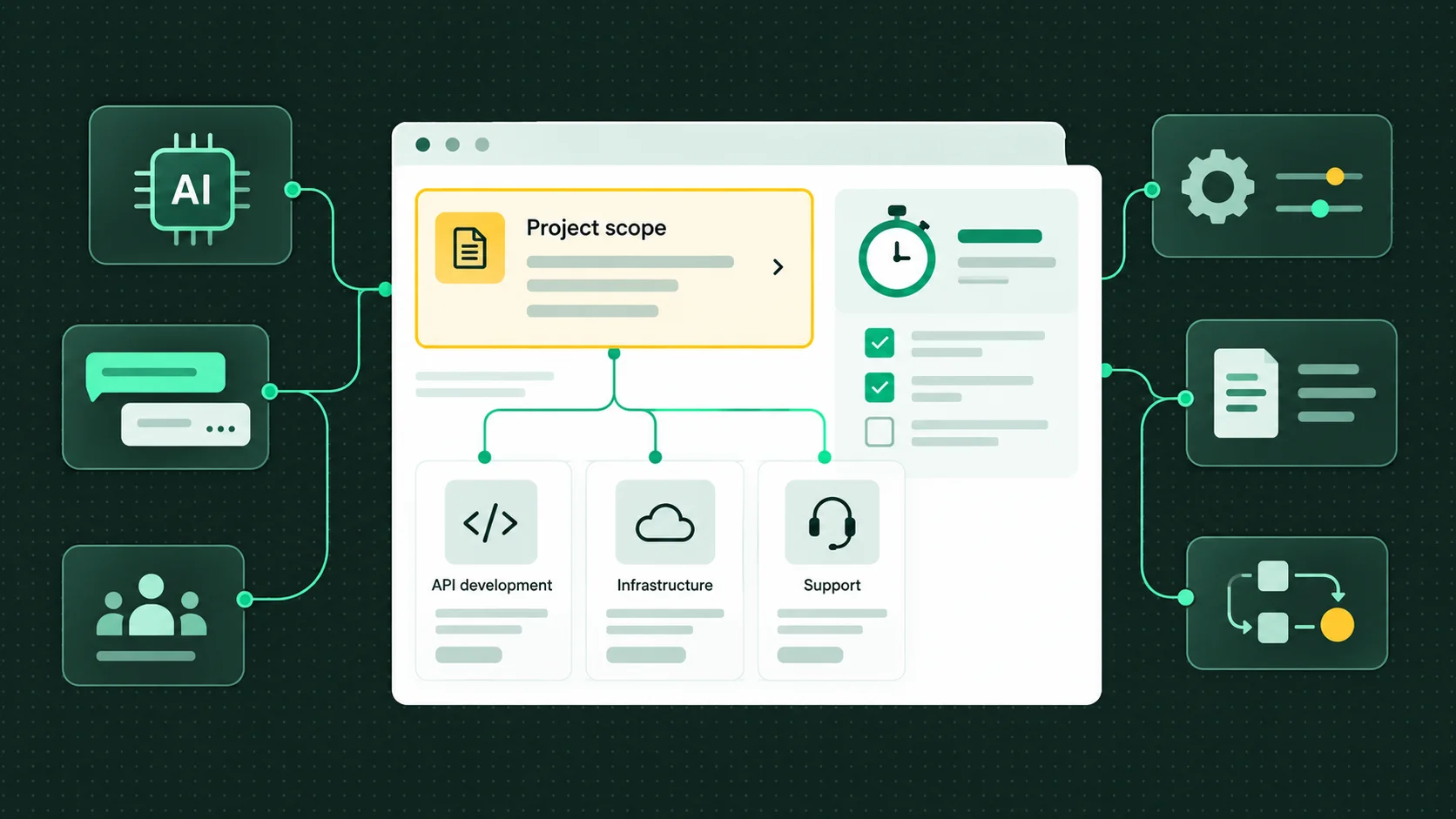
The budget depends on the process you want to improve and the condition of the systems involved. An assistant that searches reviewed documentation has a different scope from a solution that interprets documents, compares information across platforms and prepares transactions for approval. Comparing the two only by the cost of access to a model overlooks much of the work.
To assess an AI integration proposal, separate the main cost areas:
- Analysis and preparation: defining the use case, reviewing the data and agreeing acceptance criteria.
- Development and integration: building the interface, connections, validation and exception handling.
- Deployment: testing, training and support during adoption.
- Operation: service usage, infrastructure, oversight and agreed maintenance.
Ask for the assumptions behind the estimate. Expected query volumes, document sizes, concurrent users and provider terms all matter. If an existing application does not offer a suitable connection, alternatives need to be assessed and their impact reflected before the scope is agreed.
Measuring the return can start with a simple calculation. As a hypothetical example, saving a net three minutes on each of 600 monthly tasks releases 30 hours of working time. Assessing the value of that result would also require the project's implementation and operating costs. Releasing time does not automatically reduce spending: the financial effect depends on how the business can use that capacity.
Quality matters alongside speed. A faster process that introduces commercial errors may leave the business worse off. Time, corrections, incidents and acceptance by the team should therefore be evaluated together.
If you are researching the cost of implementing AI in your business, prepare a sample of the process and an estimate of its volume. This gives a supplier the information needed to discuss a realistic budget and helps you decide which first phase is worth commissioning.
Choosing an AI integration company and getting started with Bloonde
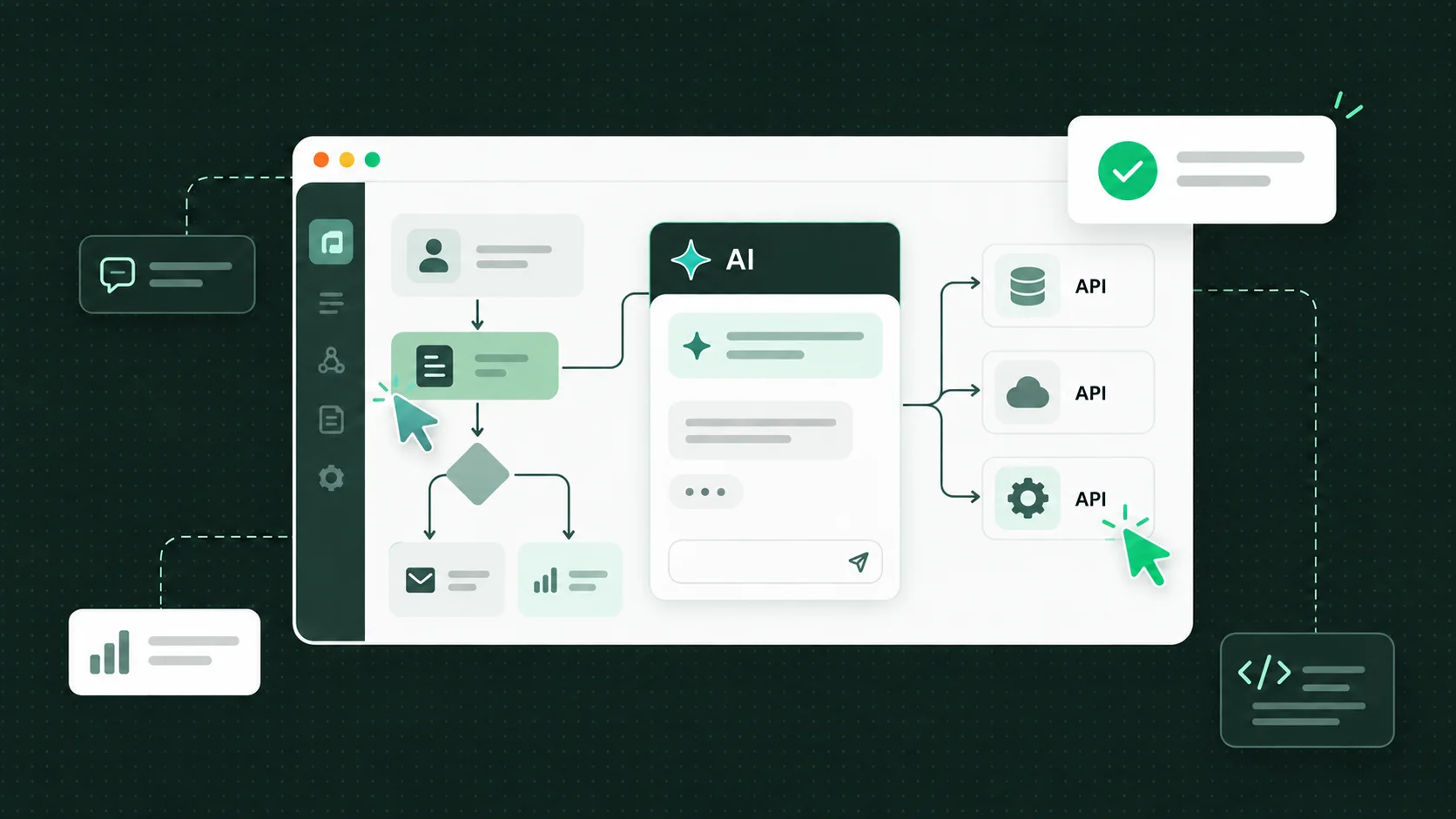
Choosing a supplier means examining how they turn a business requirement into software that can be maintained. Ask for an explanation of the complete workflow: where information will come from, how results will be checked, where they will be recorded and who will respond to problems. Clear answers make it easier to compare proposals with equivalent scopes.
Agree what documentation will be delivered, how access will be managed and what maintenance will include. Ask what happens if you later change a management application or want to use a different model provider. These decisions affect continuity and should be reflected in the project scope and commercial terms.
At Bloonde, we can help connect consulting with the development and integrations your operations require. Our approach to applied AI includes identifying opportunities, validating ideas through prototypes and introducing solutions gradually. The project is defined around the task, its users and the systems that need to participate.
To prepare for an initial conversation, gather a brief description of the process, the applications involved and a few anonymised examples of inputs and expected results. Include who currently uses the information, the problems they encounter and any constraints a change must respect. These details make it possible to begin defining a solution and identify the questions that still need answers.
If you are looking for an AI integration company to connect intelligent tools with your business processes, tell Bloonde about your project and request a proposal. We can assess which use case is suitable for a first implementation and what connections it requires. The next step is to define a scope you can review, budget for and evaluate against practical results.
Cinco ejemplos de software a medida para empresas

AI automation for SMEs